Jurassic Sandstone and the First People to Mark It
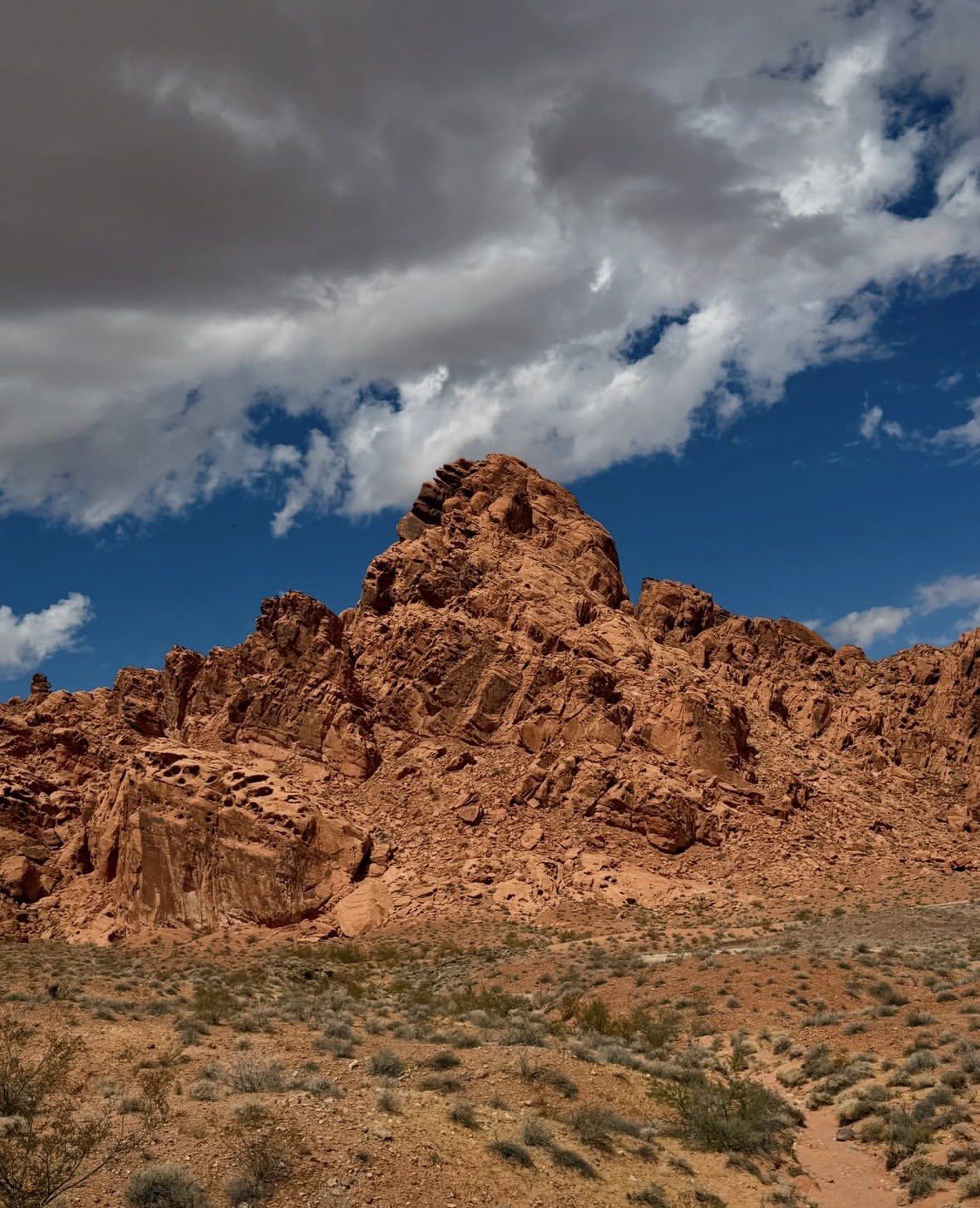
Aztec sandstone from the Jurassic period makes up the red rock at Valley of Fire, left as wind-blown sand after the inland seas that once covered this part of the Mojave Desert drained away. That stone now spreads across roughly 40,000 acres near Overton, in Clark County, Nevada. Human marks came far later. Petroglyphs cut into the rock here were carved by the Basketmaker culture about 2,500 years ago, with Early Pueblo peoples following them into the same canyons. The clearest panels are still reached on foot: the walls of Petroglyph Canyon along the 0.75-mile Mouse's Tank trail, and the carvings at Atlatl Rock, which include a depiction of the atlatl, a spear-throwing tool.
State ownership started with roughly 8,500 acres of federal land transferred to Nevada in the 1920s, a fraction of the park's present size. Construction followed in 1933, when the Civilian Conservation Corps built the first facilities and campgrounds, including the stone cabins that still stand beside Valley of Fire Road. Those cabins went up as shelters for travellers on the Arrowhead Trail and serve as a picnic area today. The park authority's history page records that the park was formally opened as Nevada's first state park on Easter Sunday 1934, with its legal designation from the legislature arriving in 1935. The official park page gives 1935 as the year of establishment.
Rock Writings, CCC Stonework and the Lost City Connection
Atlatl Rock carries the park's best-known rock writings, reached by a stairway to a viewing platform that is high enough to be one of the few spots in the park with any cell signal. The park asks visitors to help preserve the panels by not touching them and not climbing on them, and the same no-climbing rule applies to the arch formations, including Arch Rock and Elephant Rock. Interpretation sits at the Visitor Center, where the exhibits cover geology, ecology, prehistory and history, and staff advise on conditions and on the specific areas where rock climbing is allowed at all. Stopping there early in a visit is the park's own recommendation.
Mouse's Tank adds a later chapter. The natural rock basin at the end of the 0.75-mile trail is named after an outlaw who hid in the canyon in the 1890s, and the park brochure notes that water can sit in the tank for months after rain. That water explains the route of the trail as much as the petroglyphs lining it. Elsewhere, the CCC's 1930s stonework and campgrounds set the shape of the park that visitors still drive through: Atlatl Rock Campground on the west-side loop road holds the sites with utility hook-ups, while Arch Rock Campground nearby stays primitive, with 29 seasonal sites listed in the park brochure.
Some of the region's archaeology left the valley entirely. The Lost City Museum, at 721 S Moapa Valley Blvd in Overton, opened in 1935 as the Boulder Dam Park Museum, built by the Civilian Conservation Corps to hold artifacts from sites about to be flooded by Lake Mead. Travel Nevada places it about 70 miles north-east of the Las Vegas Strip, just south of Overton. Its exhibits include an Ancestral Puebloan pueblo cluster built over an excavated site, a reconstructed pit house, pottery, basketry and petroglyphs. It opens Tuesday to Sunday, 8.30 a.m. to 4.30 p.m., closed Mondays, and has parking for buses, RVs and cars.
Valley of Fire by the Numbers
2,500 years
Age of the Basketmaker petroglyphs in the park
1933
Civilian Conservation Corps begins the first facilities, campgrounds and stone cabins
1934
Formally opened on Easter Sunday as Nevada's first state park
1935
Legal designation from the Nevada legislature; the official establishment year
8,500 acres
Federal land transferred to Nevada in the 1920s to start the park
40,000 acres
Aztec sandstone the park covers today
Screen Credits, Visitor Numbers and a New Visitor Center
Nevada Film Office records list Valley of Fire as the Nevada filming location for Total Recall, released 1 June 1990, and for Star Trek Generations, released 18 November 1994. The park's own brochure identifies the Silica Dome Overlook as the Star Trek Generations location, reached by the signed Fire Canyon Road spur off the White Domes Road corridor north of the Visitor Center. Those two titles are the only Valley of Fire productions with dedicated entries in the state film office's Scene in Nevada index. Park documents also confirm that the remains of a 1960s movie set stand on the 1.1-mile White Domes Loop, without naming the film.
Visitation has grown with the park's footprint. A University of Nevada, Reno Extension study recorded 810,340 visitors in 2023, after 843,182 in 2019 and 618,950 in 2022, and Nevada State Parks now describes the park as receiving nearly one million visitors a year. The same study surveyed 634 visitors: 97.5 per cent rated their trip good or excellent, none rated it poor or terrible, and 81.9 per cent said they were somewhat or extremely likely to return. The activities people reported most were hiking on trails at 73.6 per cent, visiting the Visitor Center at 65.3 per cent, walking at 63.6 per cent and driving for pleasure at 49.8 per cent.
Most visitors now meet the newest piece of park history first. A new Visitor Center, a project costing more than $30 million, had its grand opening on 22 November 2025, with a 200-seat outdoor amphitheatre and a 10-minute orientation film, Valley of Fire: A Journey Through Time and Stone, narrated by William Shatner. The Visitor Center and gift shop are open daily from 9 a.m. to 4 p.m., with hours that may differ on holidays, and the administrative office works Monday to Friday, 9 a.m. to 4 p.m., closed on state holidays. Dogs stay outside the building; only service animals go in.
Valley of Fire Today
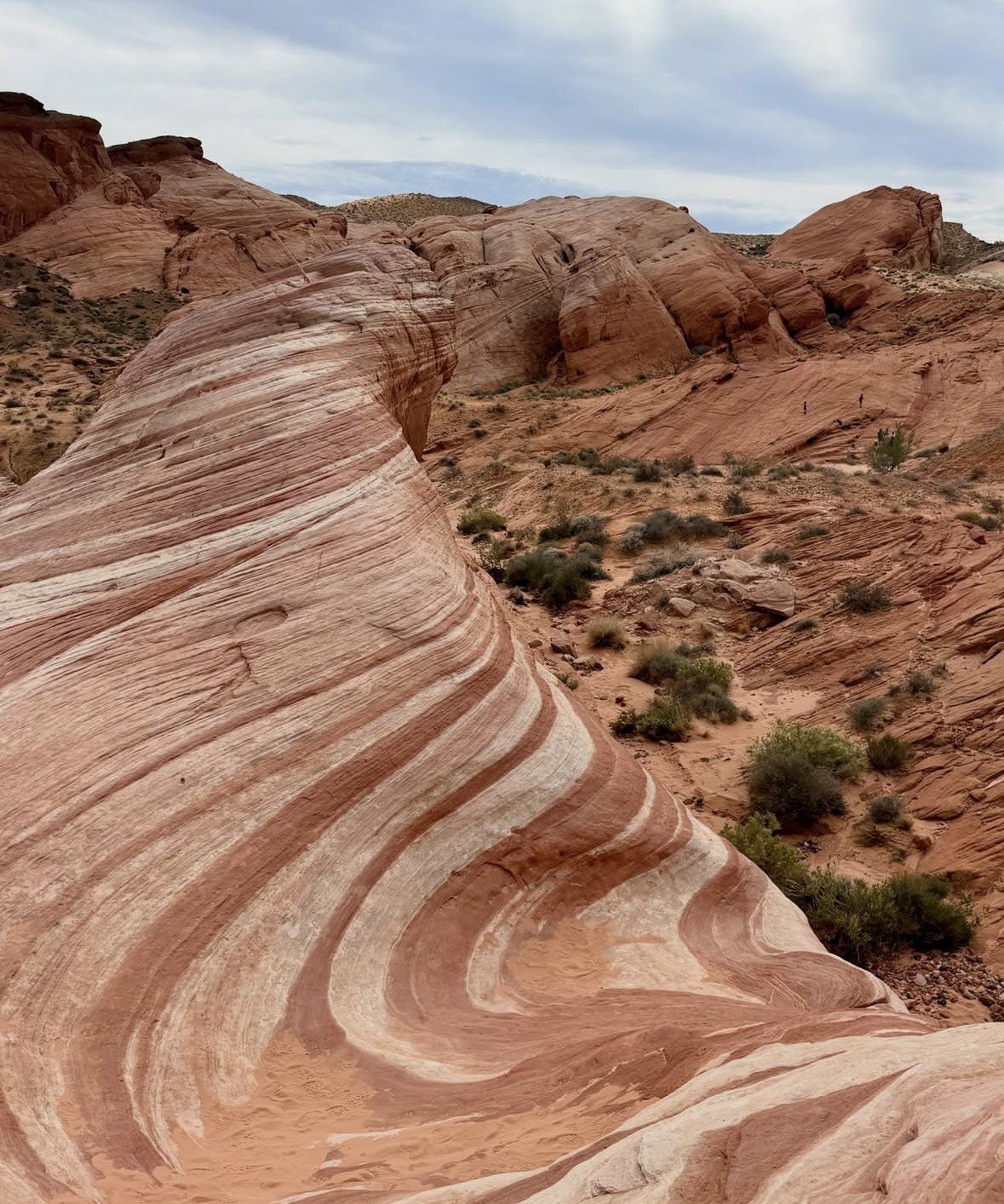
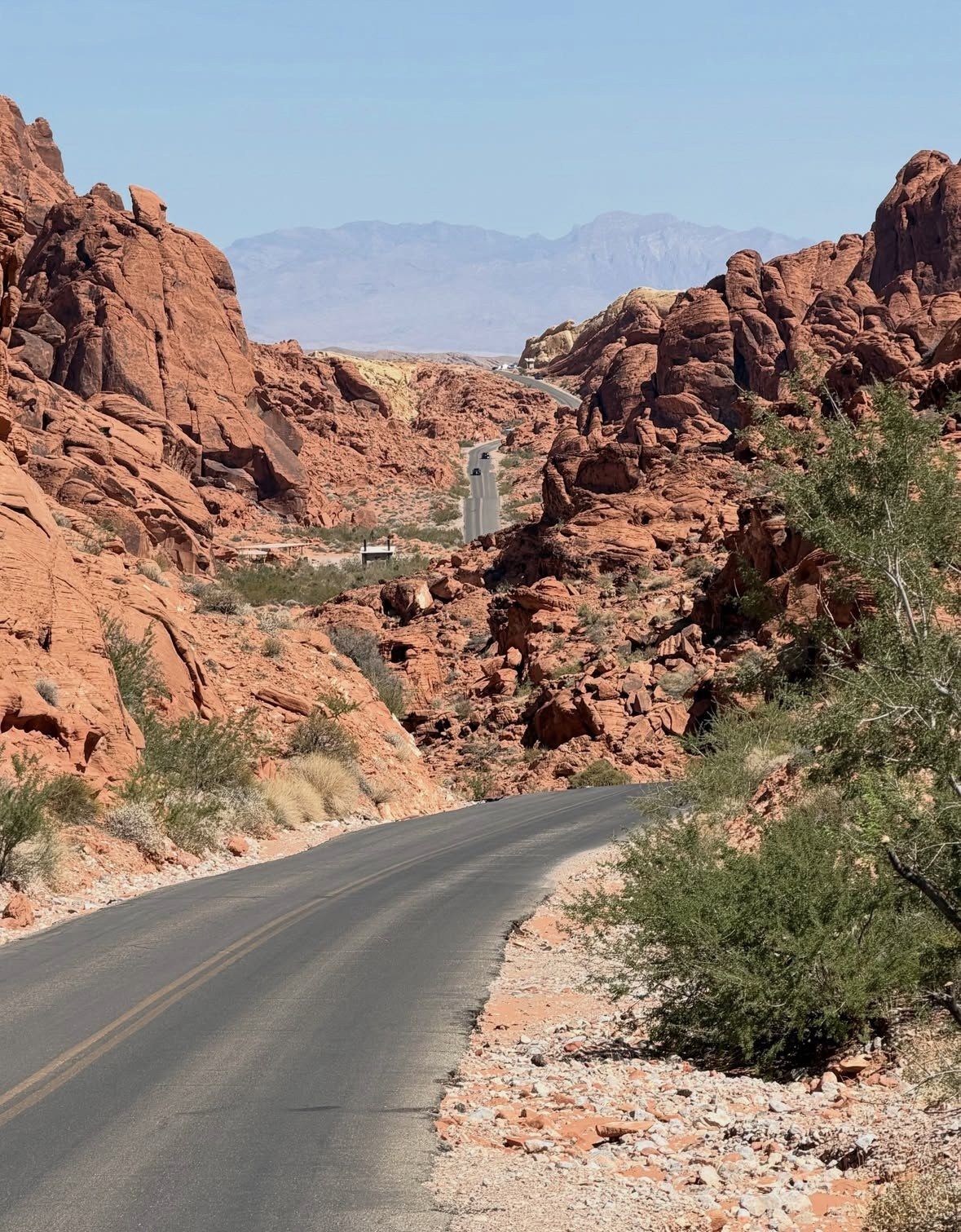
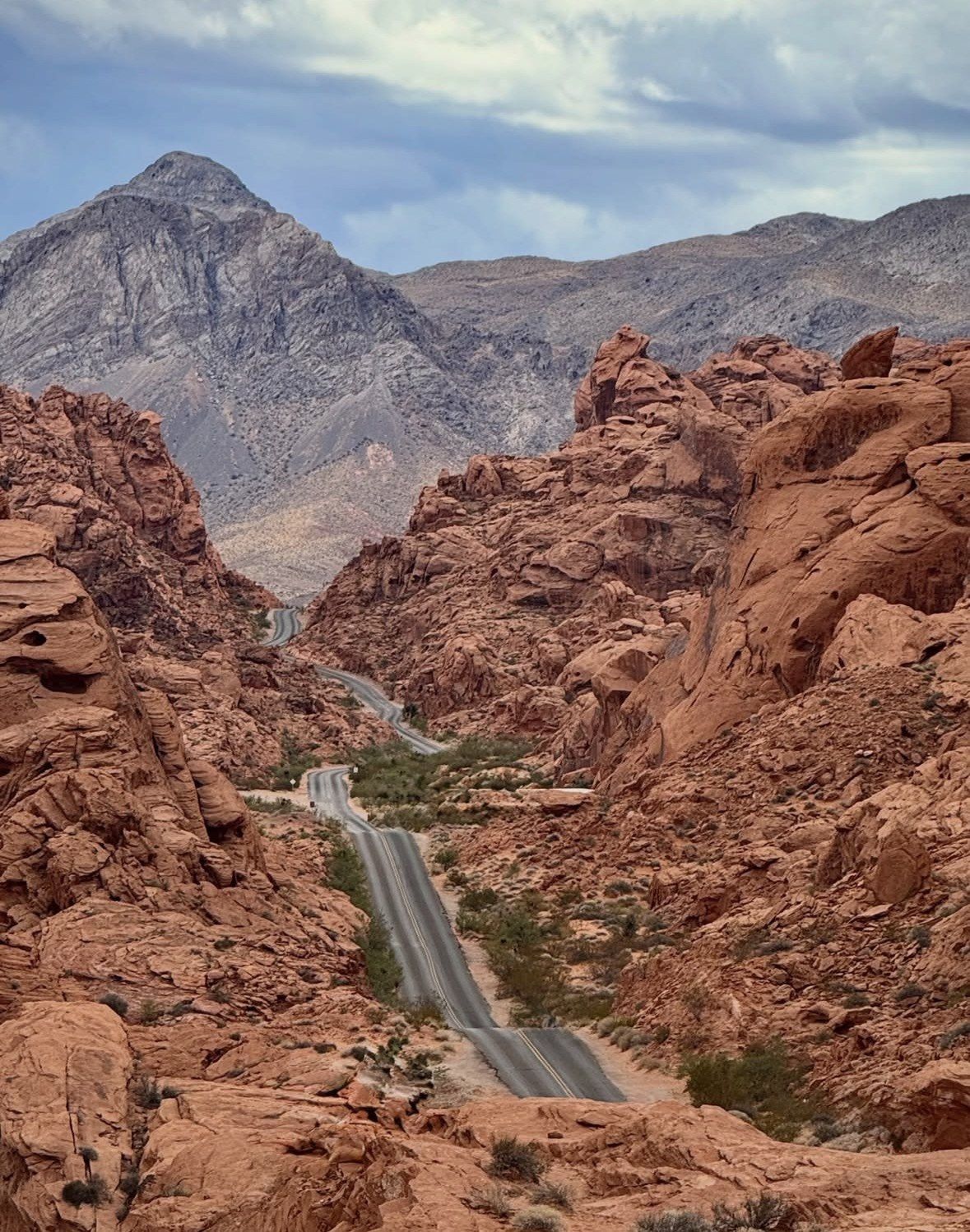
Day use runs from sunrise to sunset, and the driving inside the park is short. Valley of Fire Road covers 7.0 miles between the West and East fee booths at 35 mph, passing the Beehives, Atlatl Rock, Arch Rock, the CCC cabins, Seven Sisters, the Petrified Logs and Elephant Rock. White Domes Road branches north for 5.5 miles at 25 mph, about 20 minutes from the Visitor Center to the end of the road, with pull-outs for Mouse's Tank, Rainbow Vista, the Fire Canyon spur and lot P3. Fire Wave is not visible from the road: it is a 1.5-mile round trip from P3, about an hour, over loose sand that makes it feel like three miles.
Timing shapes the visit more than anything else here. The park authority names spring and autumn as the preferred seasons, with winter running from freezing up to about 75 F (24 C) and summer highs commonly above 100 F and sometimes near 120 F. As a heat-safety rule, trails longer than a mile close from 15 May to 30 September, including White Domes Loop, Fire Wave, the Seven Wonders Loop and Pastel (Pink) Canyon. The park closes completely from 1 to 14 December, which in 2026 means Tuesday 1 December to Monday 14 December, with normal operations from Tuesday 15 December. Since 3 August 2026 the West Entrance has been closed Monday to Thursday for construction, so Friday to Sunday suits an Interstate 15 arrival.